
Top 5 Industries Benefiting from High Shear Mixer Design and Technology
High-shear mixing technology is changing the game for how products are made, from the lab to the production floor. With an innovative high shear...

Explore our full range of process equipment engineered for precision, performance, and durability. From industrial mixers and stainless steel tanks to custom mixing systems and mills, we deliver scalable solutions for every stage of your production process.


From air pollution control to advanced water treatment, Branch Environmental by MXD Process delivers engineered systems that help you meet environmental regulations and operational goals.

MXD Process offers end-to-end services—from custom fabrication and engineering to automation, lab testing, and equipment refurbishing—to bring your process to life and keep it running smoothly.

Access MXD Process resources including blogs, technical guides, manuals, and maintenance tips—everything you need to optimize, troubleshoot, and expand your process knowledge.
5 min read
In many manufacturing facilities, mixers are the workhorses of the production line. They blend, emulsify, and homogenize day in and day out. Often, facilities rely on older or basic mixers that seem to "get the job done." They may run for long cycles or require frequent operator adjustments, but as long as the product eventually comes out, the equipment is rarely questioned.
However, this perspective often overlooks the significant impact that mixing inefficiencies have on product quality, throughput, and overall operating costs.
Many plant managers and engineers eventually find themselves asking, “Is my current mixer holding back our efficiency or product quality?”
The answer is often yes. Outdated equipment can create hidden bottlenecks that limit growth and eat into profit margins.
This article explores whether upgrading to modern high-shear mixer equipment and technology delivers a measurable return on investment (ROI). We will examine how this advanced equipment works, the hidden costs of sticking with inefficient systems, and how to determine if an upgrade is the right move for your facility.
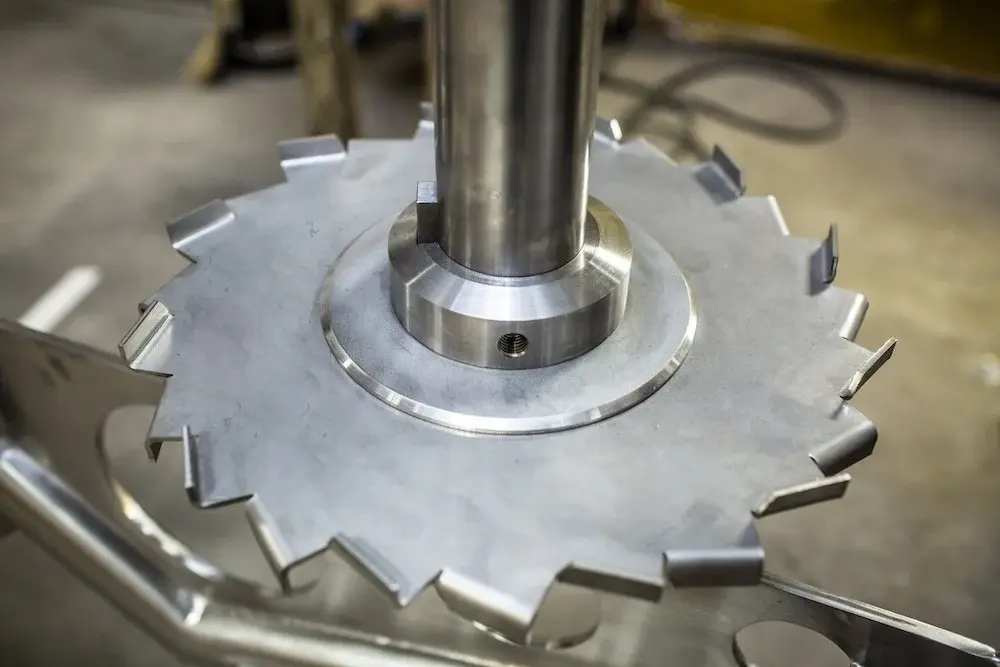
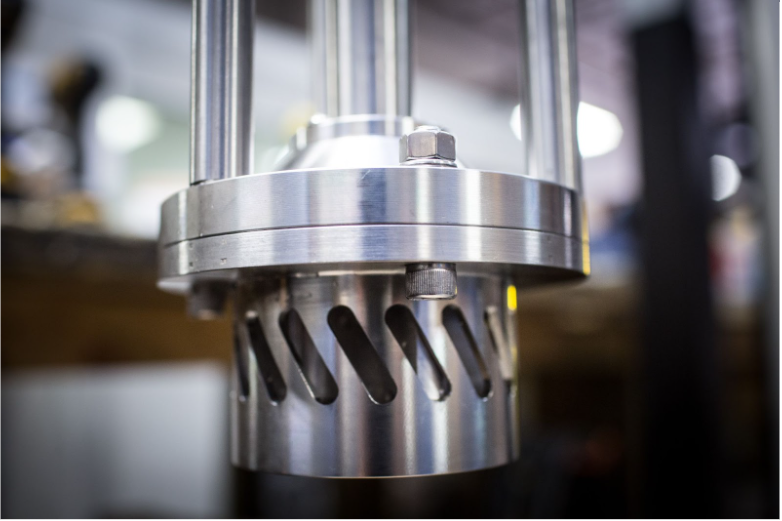
To understand the value of high-shear mixer equipment, it's important first to understand its function. Unlike conventional agitators that simply stir fluids, a high-shear mixer uses a rotor–stator mechanism to impart intense mechanical and hydraulic energy into a formulation.
The rotor, spinning at high speeds, draws material into the workhead and expels it radially through the openings in the stationary stator. This action creates a powerful cycle of suction and expulsion, subjecting the material to intense shear.
This process achieves rapid particle size reduction, uniform dispersion, and stable emulsification in a fraction of the time required by standard mixers. The specific high-shear mixer design allows it to handle challenging viscosities and complex formulations that would overwhelm conventional equipment.
This advanced high-shear technology is what fundamentally changes production outcomes.
The difference between a basic agitator and high-shear mixer equipment is not just incremental; it's transformative.
The key advantages include:
Conversely, relying on outdated or inadequate mixers introduces significant limitations:
The upfront cost of a new mixer can seem daunting, but the long-term costs of keeping an inefficient one are often far greater. These "hidden" expenses accumulate over time, impacting profitability in ways that are not always immediately obvious. Examining the right high-shear mixer design can help mitigate these costs.
The most direct cost of an inefficient mixer is lost time. Longer blend times slow down the entire manufacturing schedule, limiting the number of batches that can be produced in a day. This directly hinders your ability to scale production or meet growing customer demand. This is where advanced high-shear technology can provide an immediate boost.
Subpar mixing leads to subpar products. Visible defects like agglomerates, poor texture, phase separation in emulsions, or inconsistent color are often traced back to the mixer. These quality issues result in higher rework and scrap rates, directly reducing profitability. A proper high-shear mixer design ensures that formulations are perfectly homogenized, eliminating these costly problems.
Inefficient mixers are often overworked, leading to premature wear and tear on motors, seals, and bearings. This shortens the equipment's lifespan and increases maintenance frequency.
Furthermore, long and inefficient cycles consume more energy, driving up utility bills. The constant stress on aging components also leads to more frequent downtime for emergency repairs, disrupting production schedules. Modern high-shear mixer equipment is designed for efficiency, reducing this strain.
Perhaps the most significant hidden cost is the lost opportunity. Lower output per shift translates directly to lower revenue potential. It also limits your facility's ability to take on new, more complex jobs or expand your product lines.
Sticking with outdated technology can prevent your business from innovating and competing effectively. Upgrading your high-shear technology opens up new possibilities.
Investing in high-shear mixer equipment is not an expense; it is a strategic investment that delivers tangible returns across multiple areas of your operation. The advanced high-shear technology and superior high-shear mixer design combine to create compelling financial benefits.
The ability to complete batches in a fraction of the time is a game-changer. This boost in speed allows for more throughput per shift without adding labor or extra shifts. For many facilities, this increased capacity alone justifies the investment in new high-shear mixer equipment.
Superior mixing performance leads to better product outcomes. With improved homogeneity and stable emulsions, defects are significantly reduced. This results in lower scrap and rework rates, translating into measurable cost savings. The consistent quality also enhances brand reputation and customer satisfaction.
Efficient high-shear mixer design means less wear on components. The rotor-stator does the work effectively, placing appropriate loads on the motor and reducing stress on seals and bearings. This leads to a longer equipment life, fewer emergency repairs, and lower energy consumption, all of which contribute to a lower total cost of ownership.
Modern high-shear mixer equipment often requires less operator intervention. Once parameters are set, the mixer can run with minimal supervision. Additionally, many modern designs are engineered for easier cleaning and faster changeovers, further improving overall plant efficiency. The right high-shear technology can free up valuable employee time.
From a purely financial standpoint, the case for high-shear technology is strong.
How do you know if your facility is ready for an upgrade? The signs are often clear if you know what to look for.
If you answered yes to any of these, it's time to evaluate the potential of high-shear mixer equipment.
To build a business case, ask these three key questions:
Answering these questions will help quantify the financial impact and justify the investment in superior high-shear technology.
Not all high-shear mixers are created equal.
To ensure a successful investment, it's important to:
Ultimately, a high-shear mixer is more than just "better equipment." It is a solution to fundamental efficiency and quality limitations that may be holding your business back. These systems are engineered to solve specific process challenges that older, simpler technologies cannot address.
By delivering faster production cycles, improving product consistency, and lowering long-term operating costs, the right high-shear mixer equipment offers a significant return on investment. It unlocks hidden capacity, reduces waste, and empowers your facility to innovate and grow. Partnering with an expert like MXD Process is not just a capital expenditure — it is a strategic step toward a more profitable and competitive future.


High-shear mixing technology is changing the game for how products are made, from the lab to the production floor. With an innovative high shear...
In the world of industrial mixing, efficiency and quality are paramount. Among the available mixing equipment, rotor stator mixers stand out for...
If you work with industrial mixers, you know the frustration of a batch that just won't come out right. Maybe the ingredients aren't blending fully,...