

Turnkey Mixing & Process Systems
Tanks, Mixers, Controls & Automation
A good mixing project isn't just picking a tank and a mixer. It's building a process system that delivers consistent product quality, predictable cycle times, and repeatable results.
This guide covers how turnkey mixing and process systems work, why integrated process systems reduce risk, how to think about manual vs. automated mixing, and more.
What Is a Turnkey Mixing and Process System?
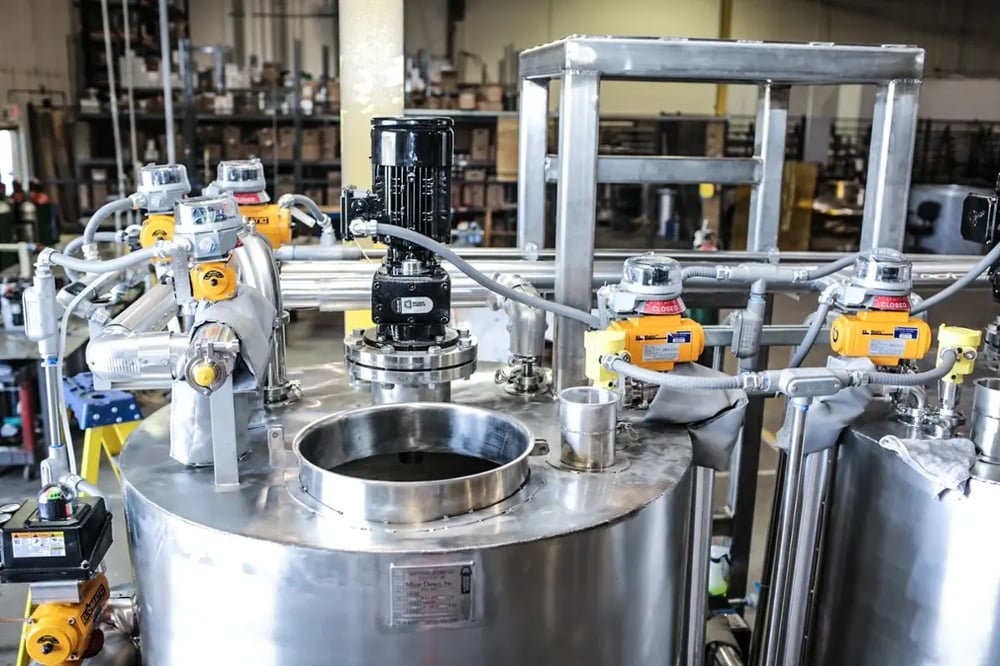
A turnkey mixing and process system is a complete solution designed to operate as one coordinated unit. Instead of sourcing equipment piece by piece, a turnkey approach aligns the tank, mixer, controls, and automation around your process goals and operating conditions.
That coordination matters because mixing performance does not come from a single component. It comes from how the vessel geometry, impeller style, shear profile, heat transfer, instrumentation, and control strategy work together through every step of the batch.
Turnkey systems are commonly built to support:
- Batch mixing and blending
- Dispersion and emulsification using high shear mixing when needed
- Repeatable temperature, speed, and timing profiles
- Recipe execution, traceability, and safety interlocks through controls and automation
Turnkey vs. Integrated Process Systems
Turnkey describes how a system is delivered. Integrated describes how well it performs across the full operation.
An integrated process system connects subsystems into a cohesive operation by integrating hardware, software, data, and processes so information and control move smoothly across departments and stages of production. In practical terms, this is how you reduce handoff issues and keep performance consistent as you scale.
The benefits of implementing integrated process systems include improved workflow efficiency, stronger quality control, cost reduction, better compliance and risk management, reduced material waste, and greater scalability and flexibility. These are the same outcomes most teams want when they are investing in a turnkey mixing system, which is why the integrated approach is a useful lens when scoping a project.
With that foundation, the next question usually becomes operational: how much of the process should depend on operators, and how much should be automated.
Automated vs. Manual Mixing Systems
Many manufacturers start with manual mixing because it is flexible and straightforward. Manual systems are operator-driven, with workers measuring and adding ingredients, monitoring blend consistency, adjusting mixing time or speed, and checking quality through hands-on methods.
As production demands rise and quality expectations tighten, automated mixing systems become attractive. Automation improves repeatability and reduces operator dependency through PLCs, sensors, and controlled dosing.
Automated Mixing Systems
| Ideal For: | Common limitations: |
|---|---|
|
High-volume production runs
|
Higher upfront investment
|
|
Processes requiring repeat results
|
Complex setup and programming
|
|
Applications needing traceability and documentation
|
Less flexible for frequent changeovers
|
|
Operations focused on efficiency and reduced labor
|
Requires skilled technical support
|
Manual Mixing Systems
| Ideal For: | Common limitations: |
|---|---|
|
Smaller batch production
|
Greater output variability and human error risk
|
|
Frequent process changeovers
|
Slower throughput
|
|
Processes prioritizing flexibility
|
Higher ongoing labor demands
|
|
Lower initial purchase price
|
Limited scalability as volumes increase
|
What Is Included in a Turnkey Process System?
A turnkey process system is best scoped as a set of coordinated modules. Each module is selected and sized around the outcome you need, then integrated so it performs predictably during production, not just during initial testing.
Process Tanks and Vessels
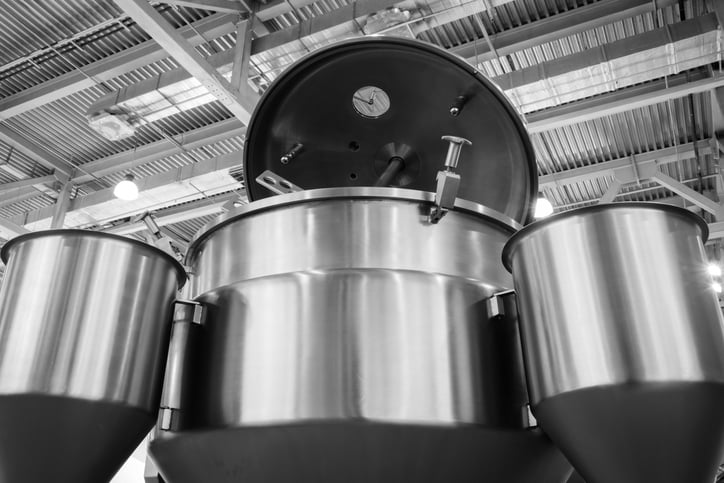
Tank geometry influences turnover, shear exposure, and repeatability. If temperature control is part of the process, the vessel design and heat transfer approach should be intentional from the start.
Industrial Mixing and Agitation
Industrial mixing is outcome-driven. You might need blending, suspension, dissolving, maintaining homogeneity, or a combination. The right approach depends on batch size, viscosity range, solids content, shear sensitivity, and required cycle time.
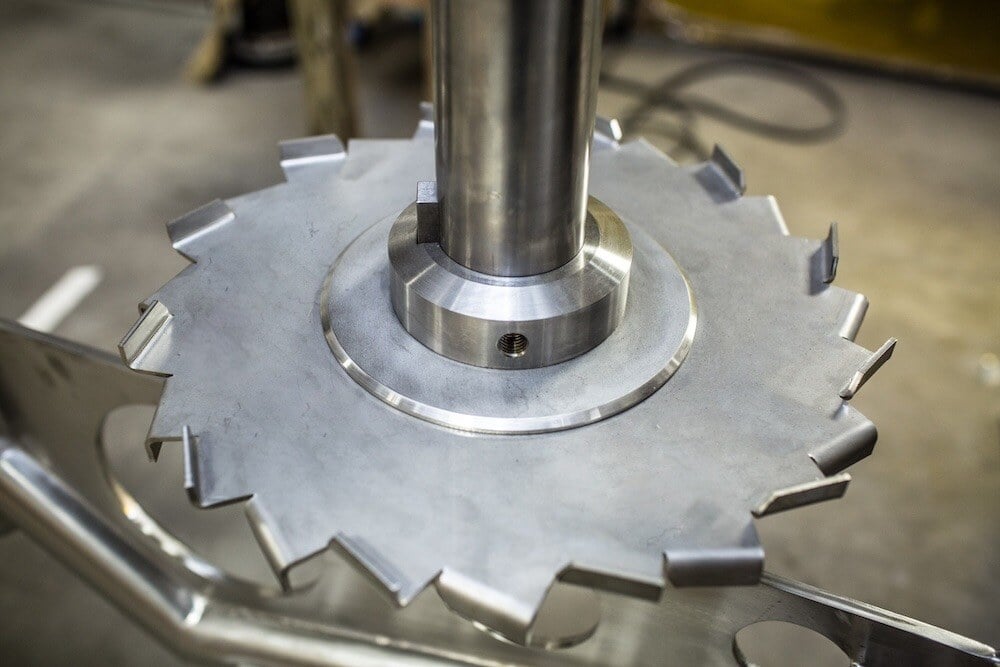
High Shear Mixing Equipment
High shear mixing is often included when dispersion quality or emulsification requires intense localized shear. In many systems, high shear is paired with bulk mixing so you get both turnover and targeted shear.
Instrumentation and Data
Sensors and data collection support consistent quality and troubleshooting, especially when documentation and traceability matter.
With the system components defined, the next step is matching the mixing approach to the job the process needs to do.
Industrial Mixing vs. High Shear Mixing
Industrial mixing typically focuses on turnover and uniformity. It's often used for blending, suspension, dissolving, and maintaining a consistent product throughout a batch.
High shear mixing is commonly used when you need dispersion, emulsification, deagglomeration, or rapid incorporation of ingredients. It can be essential for some products, but it is not automatically the best choice for every application, especially if the product is shear-sensitive or prone to foaming.
In practice, many turnkey process systems use both. Industrial mixing handles bulk turnover and uniformity, while high shear mixing is applied in a controlled way for targeted dispersion or emulsification. Controls and automation then help maintain repeatability by ensuring the same time, speed, temperature, and sequence are executed batch after batch.
That is also where process engineering becomes the glue that makes the equipment choices actually work together.
Design Your Tank Before You Spec the System
In most turnkey projects, the tank design is not just a detail. It is the foundation the entire mixing system is built on. Vessel geometry affects turnover, shear exposure, heat transfer performance, instrumentation placement, cleanability, and how the mixer performs in the real world.
If you are still early in planning or want to validate options quickly, MXD’s tank designer gives you a practical way to start structuring the vessel requirements before you lock in the rest of the system. You can use it to explore tank configurations and communicate what you need more clearly when you move into engineering and quoting.
Process Engineering for Turnkey Mixing Systems
Process engineering turns real-world requirements into an equipment and controls plan that works in production. It connects the mixing outcome you need to the system design decisions that drive performance.
A strong process engineering scope for turnkey mixing systems typically includes process discovery and requirements definition, system layout and flow path planning, equipment selection and sizing, control strategy and automation scope, and repeatability, safety, and quality considerations.
This is also where integrated process systems thinking shows up in a practical way. When hardware, controls, and data are designed to work together, you reduce redundancy, improve coordination, and make scaling and continuous improvement easier across the operation.
With that in mind, here are a few common questions that come up when teams are evaluating turnkey systems.
Frequently Asked Process Engineering Questions
What Are Integrated Process Systems?
Integrated process systems combine hardware, software, data, and processes into a cohesive operation so information flows across departments and stages of production, improving coordination and reducing redundancy.
When Should We Move from Manual to Automated Mixing?
MXD frames the decision of manual vs. automated mixing around increasing demand and tighter quality standards. Automation improves repeatability, efficiency, safety, and traceability, but it requires higher upfront investment and ongoing maintenance planning.
Do I Always Need High Shear Mixing?
No. High shear is useful for dispersion and emulsification, but some products do better with bulk mixing only. Many systems apply high shear in a controlled way alongside industrial mixing to balance turnover, shear exposure, and consistency.
Moving Forward with a Process Engineer
If you are planning a new line or upgrading an existing operation, a turnkey approach can reduce risk and improve repeatability by aligning equipment, controls, and process engineering from the start.
If you are ready to start shaping the vessel requirements, use the tank designer to narrow down the tank configuration, then bring that output to MXD Process for a process engineering conversation about mixing approach, automation scope, and system integration.


